
Whatsapp: +86 13925897099
Address: No. 17, Chicheng 10th Road, Wanxiang Industrial Park, Yangdong District, Yangjiang City, Guangdong Province, China

How To Choose Nylon Screws?

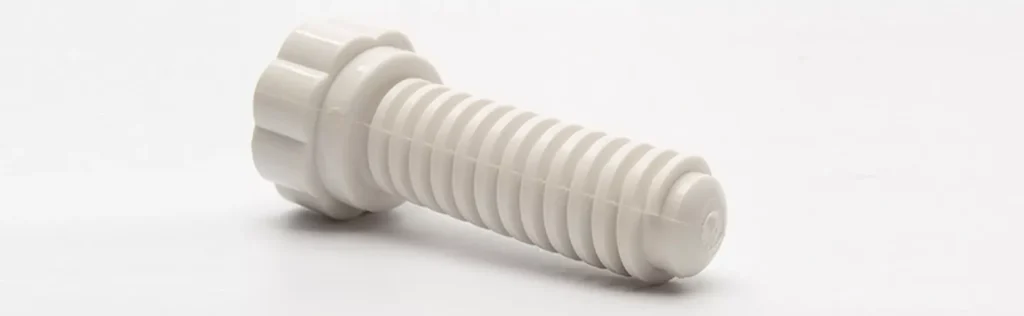
Nylon screws—also known as plastic screws or PA66 fasteners—are rapidly gaining traction across industries ranging from electronics and medical devices to automotive manufacturing and renewable energy. And for good reason: they offer a unique combination of properties that metal screws simply cannot match. This article will walk you through what nylon screws are, what makes them special, and—importantly—what their limitations are, so you can make an informed decision for your next project.
What Exactly Are Nylon Screws?
Nylon screws are precision fasteners manufactured from polyamide (PA), a family of high-performance engineering thermoplastics. The most common material used in fastener production is Nylon 6/6 (PA66), which consists of two monomers each containing six carbon atoms—hence the “6/6” designation. Nylon 6/6 is the preferred choice for fasteners due to its lower cost and slightly higher temperature range compared to Nylon 6.
A Note on Terminology
You may have encountered the term “Nylon Glue” or “Nylon Adhesive” in some contexts. This is not a screw material, but rather refers to Nylon Patch or Nylon Pellet Locking—a thread-locking technology where nylon material is fused onto screw threads to increase friction and prevent loosening from vibration. While we‘ll touch on this technology later, the focus of this article is on nylon as a fastener material itself—nylon screws, nuts, and bolts made entirely or primarily from polyamide resin.
The 5 Key Advantages of Nylon Screws
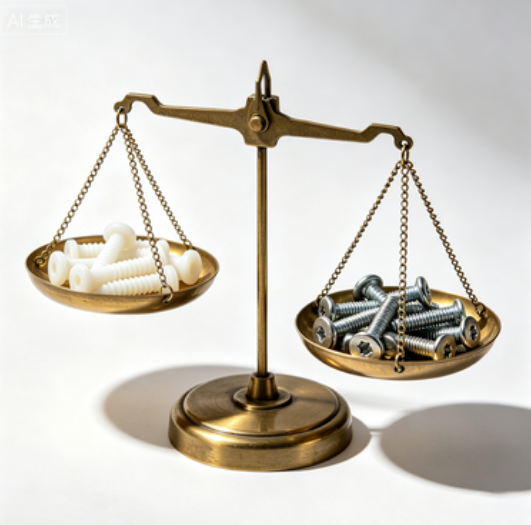
1. Lightweight — Up to 85% Lighter Than Steel
One of the most compelling reasons to choose nylon screws is their weight. Nylon fasteners are approximately 1/7th the weight of steel equivalents. Plastic screws typically weigh 50-80% less than comparable metal screws, which makes them ideal for applications where every gram counts—aerospace components, automotive weight reduction initiatives, and portable electronic equipment.
In many cases, using steel fasteners would make a product heavier than necessary, making nylon a smarter, more efficient choice.
2. Electrical Insulation — No More Short Circuits
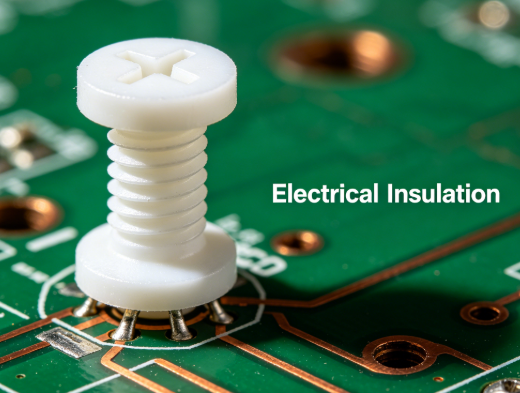
Unlike metal screws, nylon screws are non-conductive. This property is absolutely critical in electronics applications. Nylon screws are used extensively to mount circuit boards (PCBs), secure components inside control cabinets, and assemble electrical enclosures—all without causing electrical interference or short circuits. Nylon fasteners offer superior dielectric properties, with volume resistivity exceeding 10¹⁴ Ω·cm and dielectric strength greater than 15 kV/mm.
This makes them essential for applications in switchgear, transformers, power distribution panels, and any environment where electrical isolation is a safety requirement.
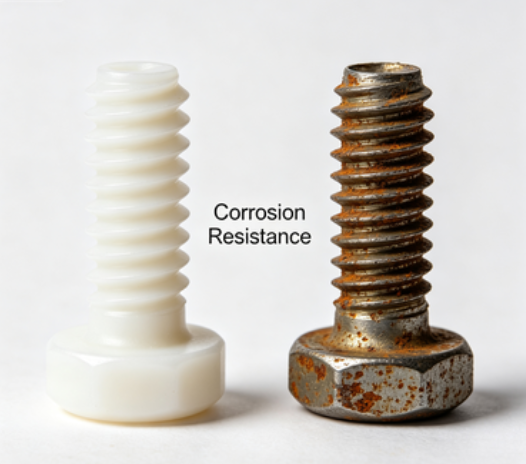
3. Corrosion Resistance — They Never Rust
This is perhaps nylon’s most obvious yet underappreciated advantage. Nylon fasteners eliminate the risk of structures corroding, rusting, or becoming damaged from solvents and lubricants. Unlike metal screws—even stainless steel—nylon screws are inherently corrosion-free and resistant to most chemicals (with the exception of strong mineral acids).
This makes nylon screws the fastener of choice for marine environments, chemical processing equipment, outdoor applications, and any setting where moisture or chemical exposure is a concern.
4. Vibration Damping — They Stay Tight
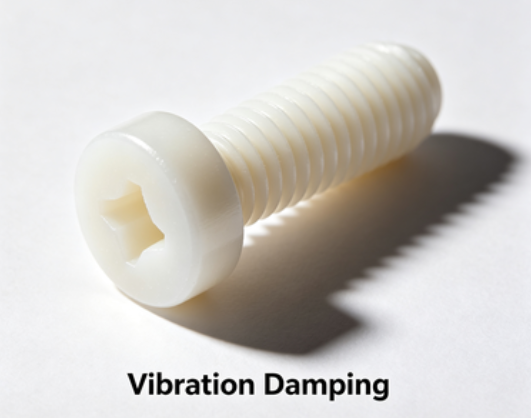
Nylon’s natural elasticity gives it excellent vibration-absorbing properties. When used in machinery or equipment subject to constant motion, nylon screws are less likely to loosen over time compared to rigid metal fasteners. Nylon absorbs vibrations, mitigating the risk of screws loosening due to persistent motion.
In fact, nylon‘s unique molecular structure allows up to 60% elongation before failure, compared to just 10-15% for most metals—giving it superior flexibility under dynamic loads.
5. Non-Magnetic and Aesthetic
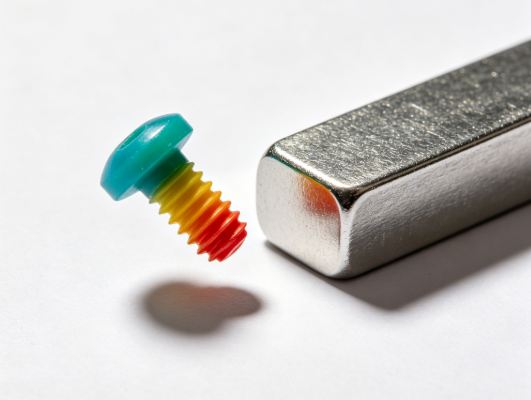
Nylon screws are non-magnetic, which is essential for medical equipment like MRI machines and certain precision instruments where magnetic interference cannot be tolerated. Additionally, nylon screws are available in a variety of colors (natural white, black, and custom colors), offering a cleaner, more polished look for consumer-facing products where aesthetics matter.
What About Strength? Understanding Nylon’s Limitations
Let‘s be transparent: nylon screws are not a replacement for metal screws in every situation. They have clear limitations that you need to understand before specifying them.
Lower Load-Bearing Capacity
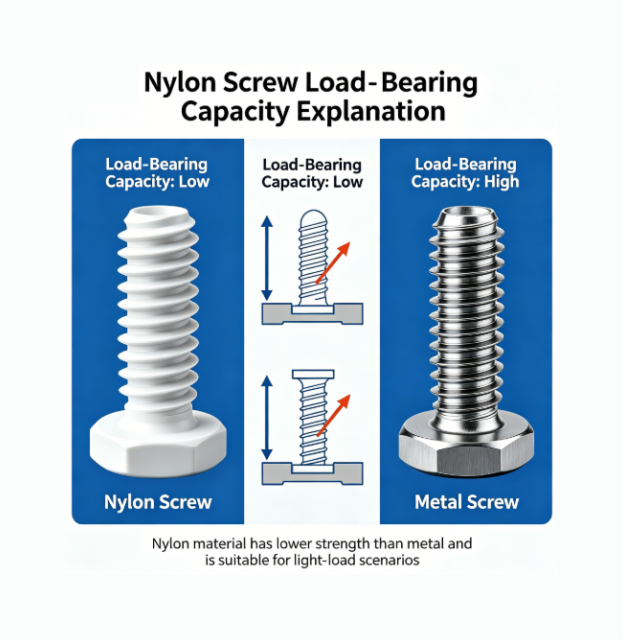
Nylon screws generally have lower load-bearing capacity and torque resistance compared to metal screws, which limits their use in heavy-duty structural applications. Standard Nylon 6/6 has a tensile strength of approximately 10,000-12,400 PSI—impressive for a plastic, but nowhere near the 70,000-150,000 PSI achievable with steel alloys.
Temperature Sensitivity
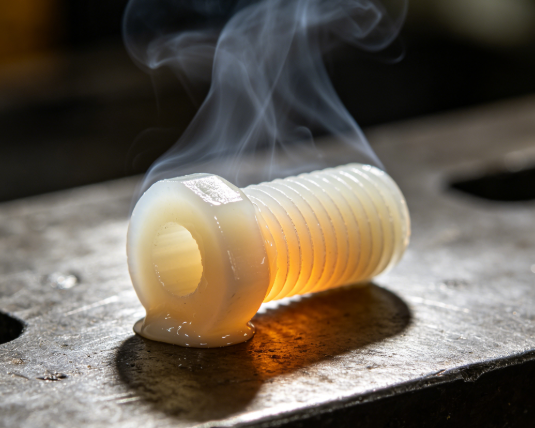
Nylon’s properties can degrade at very high temperatures. Generally, nylon fasteners have a continuous service temperature limit of around 120°C (248°F) for PA66, with short-term peaks up to 150°C. This makes them unsuitable for applications involving extreme heat—think engine blocks, industrial ovens, or high-temperature processing equipment.
Moisture Absorption
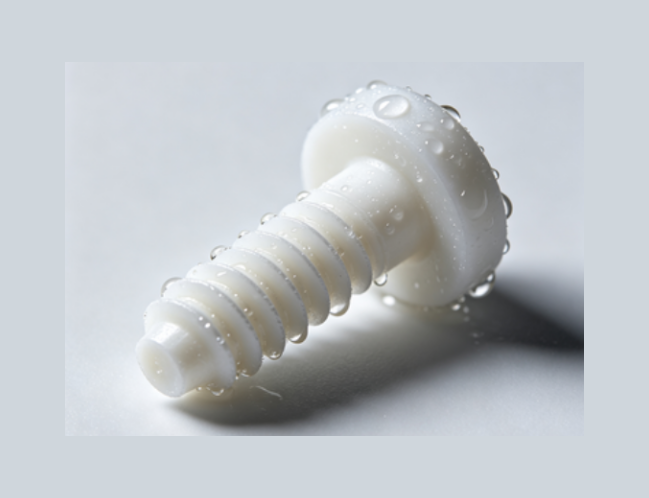
Nylon is hygroscopic, meaning it absorbs moisture from the environment. This can cause slight dimensional changes (swelling) over time. While this property can actually help ensure a snug fit and prevent loosening in some applications, it‘s something to be aware of in precision assemblies with extremely tight tolerances.
Where Are Nylon Screws Used?
Nylon screws are employed across a remarkably diverse range of industries:
- Electronics & Electrical Equipment: PCB mounting, control panel assembly, transformer tie rods, and busbar supports. Nylon provides electrical insulation and prevents arc tracking.
- Medical Devices: MRI machines, surgical equipment, and diagnostic instruments where non-magnetic properties and chemical resistance are essential.
- Automotive Manufacturing: Interior components, under-the-hood installations in non-high-temperature zones, and any application where corrosion resistance and weight reduction are priorities.
- Aerospace: Lightweight structural and non-structural fastening where every ounce saved translates to fuel efficiency.
- Renewable Energy: Wind power cabinets, solar panel mounting systems, and electrical isolation in power distribution equipment.
- Marine & Chemical Processing: Any environment where corrosion from saltwater or chemicals would destroy metal fasteners.
- Consumer Products: Appliances, furniture, and recreational equipment where aesthetics and corrosion resistance matter.
The Bottom Line: When Should You Choose Nylon Screws?
Choose nylon screws when:
- Electrical insulation is required (non-conductive)
- Weight reduction is a priority
- Corrosion resistance in harsh environments is essential
- Vibration damping is needed to prevent loosening
- Non-magnetic properties are critical
- You want a clean, aesthetic finish without rust stains
Stick with metal screws when:
- High structural load-bearing capacity is required
- The application involves continuous high temperatures (>120°C)
- You need maximum tensile or shear strength
Final Thoughts
Nylon screws are not a niche curiosity—they are a mainstream engineering solution that solves real problems in electronics, medical devices, automotive manufacturing, and countless other industries. Their unique combination of lightweight design, electrical insulation, corrosion resistance, and vibration damping makes them indispensable for modern product design.
If you‘re sourcing fasteners for your next project, don’t default to metal without considering what nylon can do. And if standard nylon doesn‘t quite meet your strength requirements, RENY (glass fiber reinforced nylon) or Nylon Patch locking screws may be exactly the upgrade you need.
Looking for nylon screws in bulk? Browse our full range of nylon screws and locking fasteners — available in both metric and imperial sizes, with custom manufacturing services available upon request.