
Whatsapp: +86 13925897099
Address: No. 17, Chicheng 10th Road, Wanxiang Industrial Park, Yangdong District, Yangjiang City, Guangdong Province, China

Furniture Industry: Furniture Connector Selection Guide

In the furniture industry, whether in professional manufacturing or DIY assembly, furniture connectors directly determine structural strength, ease of assembly/disassembly, and surface aesthetics. Whether you are a panel furniture factory, brand owner, or home DIY enthusiast, understanding the performance and application of each type of furniture connecting fitting is the first step to avoiding quality issues and improving production efficiency. This furniture connector selection guide systematically covers common types of fittings, key selection factors, and typical application recommendations to help you quickly identify the most suitable furniture hardware connection solution.
1. Common Types of Furniture Connectors and Their Features
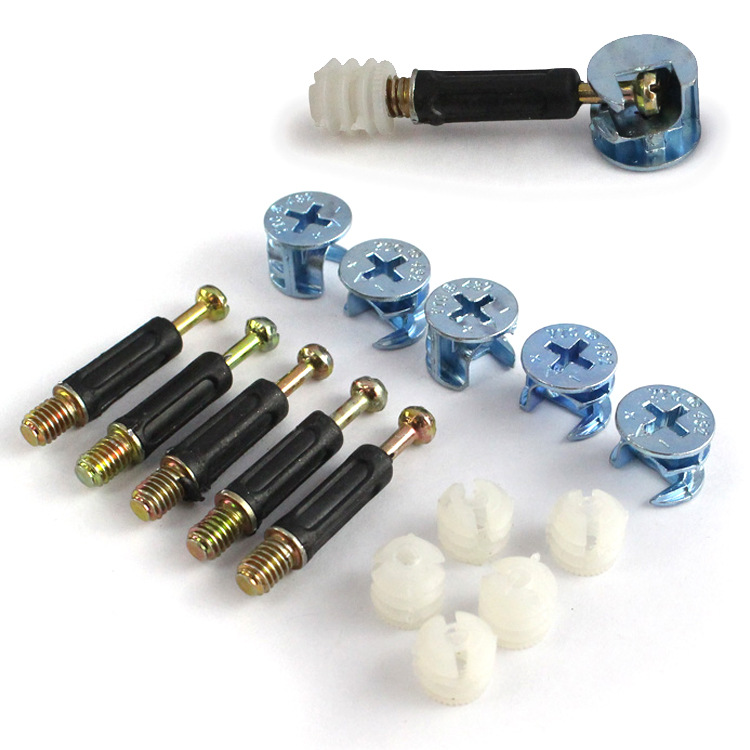
(1) Cam Lock & Dowel System (3-Piece Connector)
The most widely used panel furniture connector, consisting of a cam (disc-shaped nut), a connecting bolt, and a pre-inserted housing (or expansion dowel). By rotating the cam, the bolt is pulled tight to create a concealed and reversible lock. Key advantages: no glue needed, easy to disassemble and reassemble, making it the go-to solution for KD (knock-down) furniture such as wardrobes, kitchen cabinets, and bookshelves.
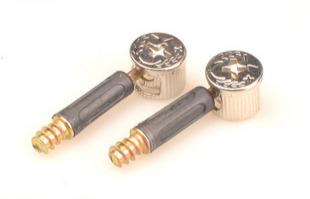
(2) Two-Piece Connector
This variant eliminates the pre-inserted housing; the connecting bolt is screwed directly into the panel’s pre-drilled hole and then tightened by the cam. It allows faster assembly and is ideal for light-load connections like shelf dividers, lowering both hardware cost and drilling steps.
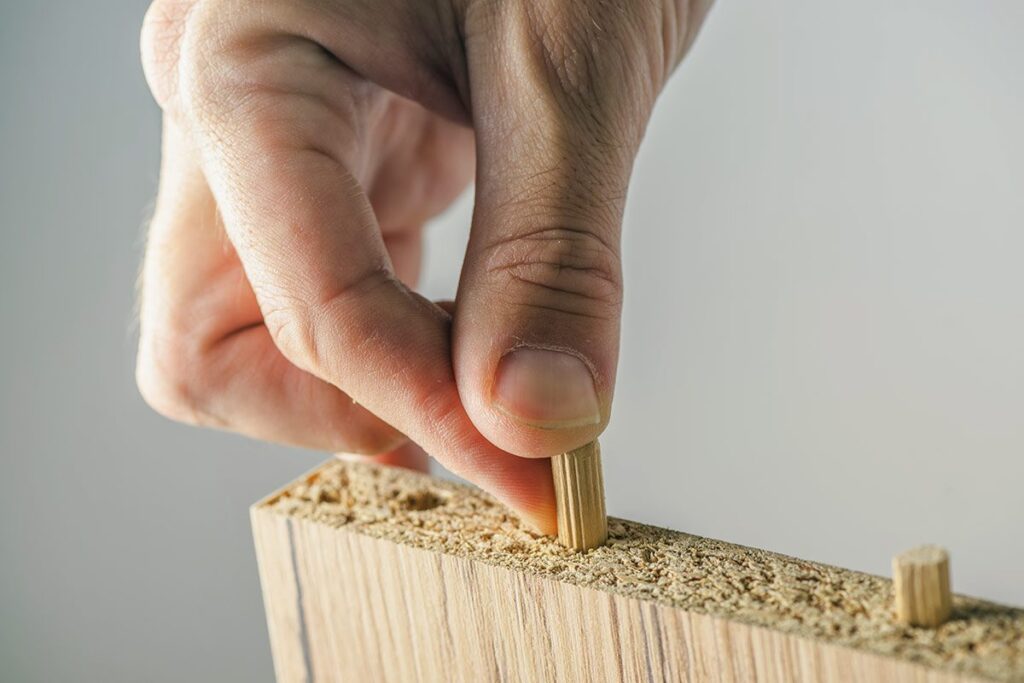
(3) Wooden Dowels
A traditional locating and joining method, usually used with glue for permanent bonding. Dowels offer accurate alignment and low cost, commonly applied in frame structures, corner reinforcement, or as auxiliary locators in cam-and-dowel systems. Available in straight or spiral grooved versions.
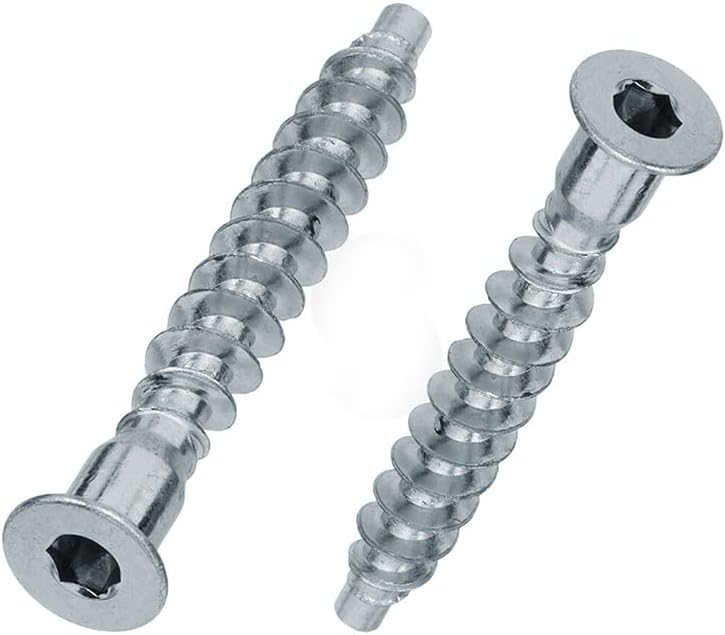
(4) Confirmat Screws & Chipboard Screws / Furniture Screws
As a key type of furniture screws, these single-piece connectors are specially designed for particle board. Their deep, coarse threads provide high clamping force. The confirmat screw (through-bolt) can fasten two panels at once without a pre-inserted nut, making it suitable for heavy-duty cabinets and sofa frames.
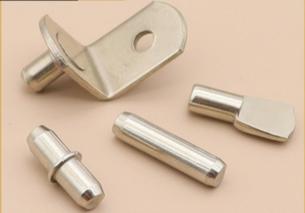
(5) Shelf Supports & Pins
Used to support or adjust shelf height. Often made of metal or durable plastic, some feature locking clips to prevent shelves from sliding. Indispensable functional hardware inside cabinets and display units.
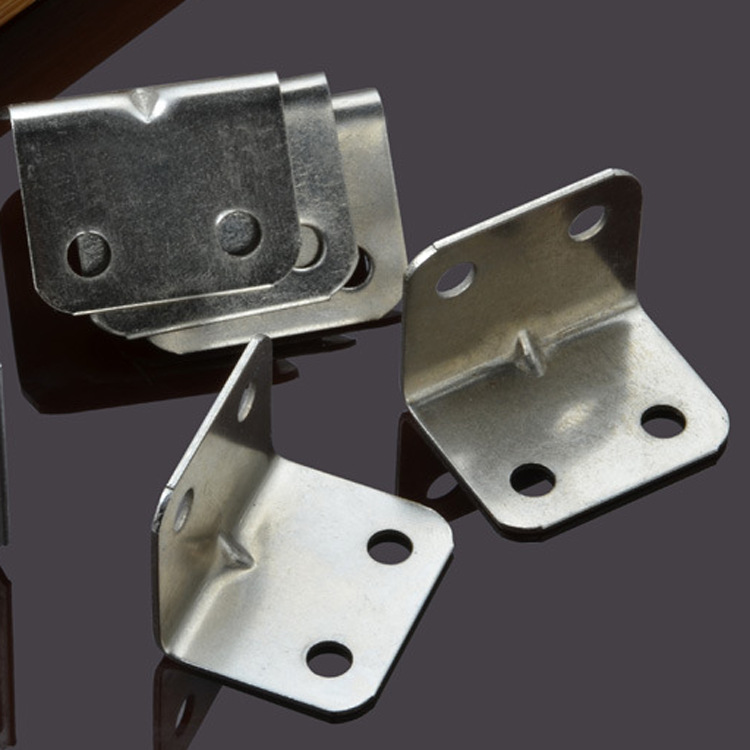
(6) Angle Brackets & Corner Braces
Metal or alloy brackets that reinforce L-shaped vertical joints. Commonly used on tables, bed frames, and cabinet back panels to boost torsional rigidity. The triangular structure effectively resists deformation.
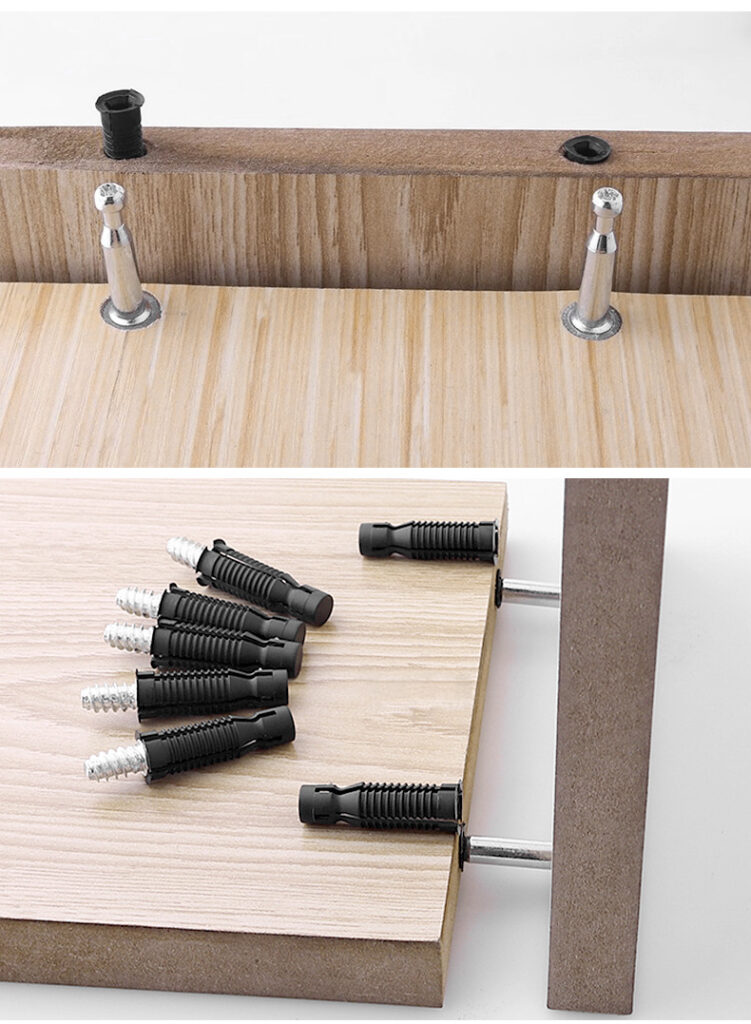
(7) Hidden Connectors
The top choice for high-end furniture that demands a flawless surface. These fully built-in tension connectors or invisible tenon fittings leave no visible hole caps after assembly, immediately elevating the piece’s perceived value. Typical systems include Invis and Tenso.
2. Six Key Factors for Connector Selection
- Substrate Material
Particle board, MDF, plywood, and solid wood each have vastly different screw-holding capacity. Particle board demands specialized high-pullout screws or expansion inserts, whereas solid wood permits simpler methods but must accommodate expansion and contraction. - Load & Application
Load-bearing units like bookshelves or bed frames require high-strength connectors (e.g., reinforced cam locks or heavy-duty half-moon connectors), while decorative dividers can use lightweight two-piece fittings or shelf supports. Always check the manufacturer’s load ratings. - Frequency of Assembly/Disassembly
KD furniture must use reversible connectors (cam locks, two-piece systems) without glue. For permanent joints, glued dowels offer an economical and robust solution. - Aesthetic Requirements
The desired surface finish dictates connector choice. Hidden connectors or pre-attached cover caps deliver a seamless, hole-free look. - Production Efficiency
Can the connector be installed automatically? Pre-inserted housings work with automatic insertion machines; screws can be driven by autofeed screwdrivers, greatly reducing manual labor and increasing assembly line output. - Total Cost
Consider not just unit price, but also the number of machining holes, assembly time, and after-sales maintenance costs. A pricier invisible connector may still be the optimal choice if it drastically lowers return rates and customer complaints.
3. Typical Applications & Recommended Solutions
- Wardrobes / Cabinets: Cam lock and dowel system (primary joint) + wooden dowels (alignment), adjustable shelf supports for shelves, and back panel clips.
- Bed Frames: Heavy-duty cam locks with thicker cams or double-headed bolts with half-moon housing, plus elongated bolts for the center rail, ensuring rigidity and no squeaking.
- Desks / Dining Tables: Use tension-type hidden connectors or high-load angle brackets at the leg-to-rail joints to prevent wobbling.
- Sofa Frames: Hex socket connector bolts with pre-installed half-moon nuts, ideal for solid wood or engineered wood frames — fast to assemble and resistant to loosening.
- KD Shelving Units: Compact two-piece connector systems minimize visible hardware and, together with shelf supports, create lightweight knock-down racks.
4. Trends & Innovations
Furniture connectors are rapidly evolving toward “tool-free assembly” and “total invisibility.” Screwless snap joints, push-in quick fasteners, and hand-turn expansion locks are the new frontiers. The combined use of zinc alloy and high-strength engineering plastics reduces weight while maintaining high tensile force. Environmentally friendly surface treatments (trivalent chromium passivation, heavy-metal-free coatings) and adherence to international standards are becoming the basic entry requirements for export-oriented furniture hardware.
Whether you are a furniture brand, trader, or factory procurement manager, choosing a professional hardware factory that offers consistent quality control and OEM/ODM support is crucial to safeguarding product quality from the very source. As a strength factory specialized in furniture connectors, we provide a full range of cam lock systems, two-piece connectors, wooden dowels, confirmat screws, shelf supports, hidden connection systems, and custom hardware. Visit our website to request free samples and a complete product catalog. We wish you a smooth selection process and global success with your furniture!