
Whatsapp: +86 13925897099
Address: No. 17, Chicheng 10th Road, Wanxiang Industrial Park, Yangdong District, Yangjiang City, Guangdong Province, China

Can Security Screws Really Prevent Theft?

If you’re responsible for securing public infrastructure, valuable equipment, or sensitive enclosures, you’ve likely asked this very question. The short answer is a qualified “Yes,” but with crucial context. Let’s dive into the world of non-standard screws and explore how certain special screws are engineered to serve as the first strong line of defense.
How Do Security Screws Actually “Secure”? The Real Deterrent Isn’t What You Think.
The primary goal of a security screw is not to be impossible to remove, but to make removal prohibitively difficult, time-consuming, and costly. It achieves this by deviating from standard fasteners in two key ways:
- Unique Drive Design : It uses a proprietary, non-standard drive recess. This instantly renders common screwdrivers and bits useless.
- Enhanced Mechanical Features: Many designs incorporate hardened steel, one-way installation (screw in, but not out), or frangible heads that break away upon attempted removal.
By combining these features, security screws move from the category of standard hardware into the realm of engineered security solutions.
What Are the “Guardians” of Security? Meet the Specialized Screws “Thieves” Hate.
Here are a few stars in the constellation of specialty screws designed for security:
1.Pin Hex / Pin Torx Screws: A standard hex or Torx recess with a central pin. Requires a matching, hollow driver bit. A highly popular and effective deterrent.
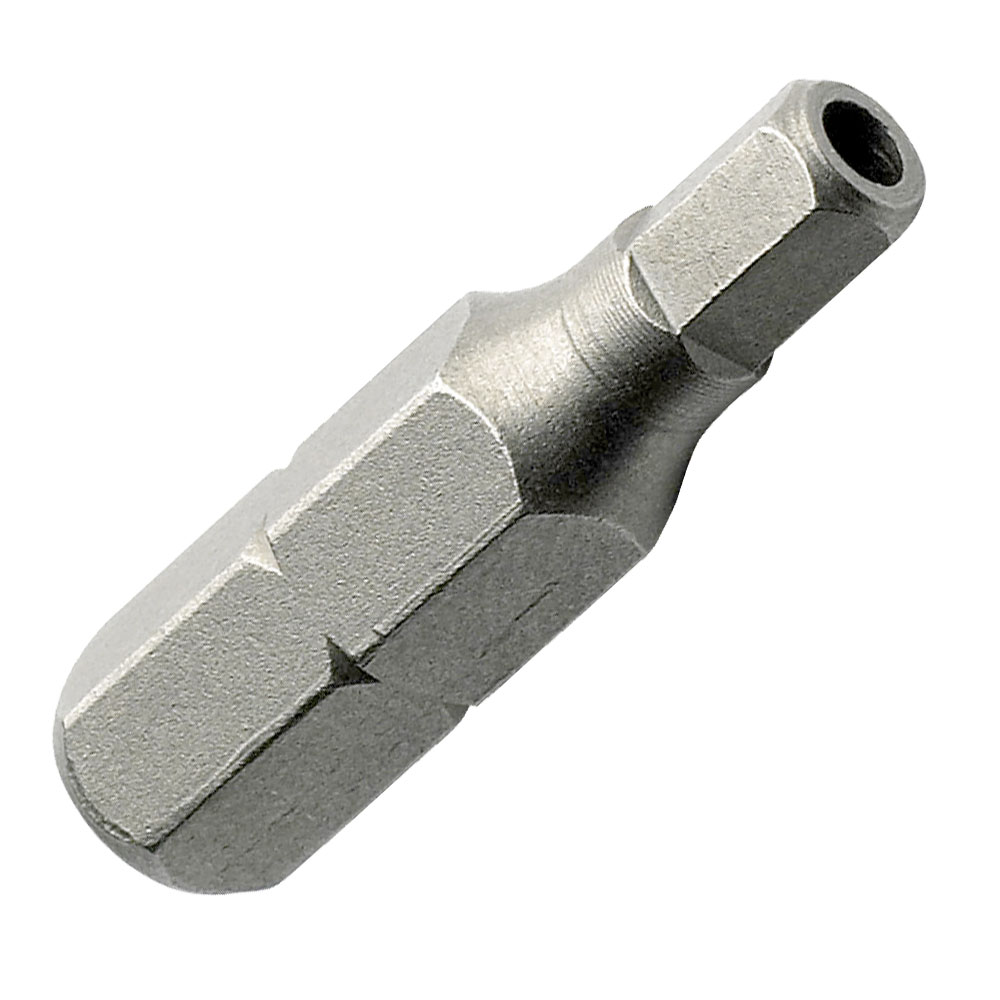
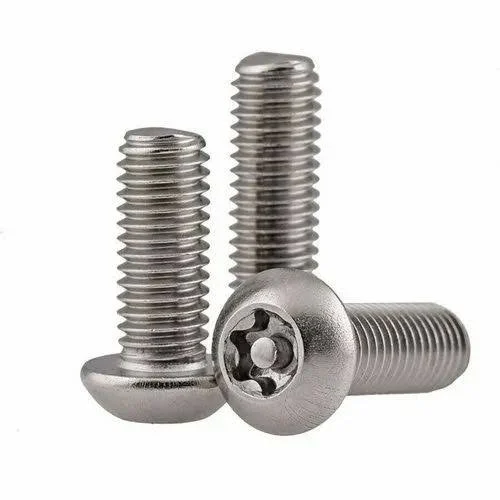
2.One-Way Screws / Clutch Head Screws: Designed to be driven in with a standard slotted or Phillips driver, but the recess cam-out when trying to reverse it, making removal extremely difficult without specialized tools.
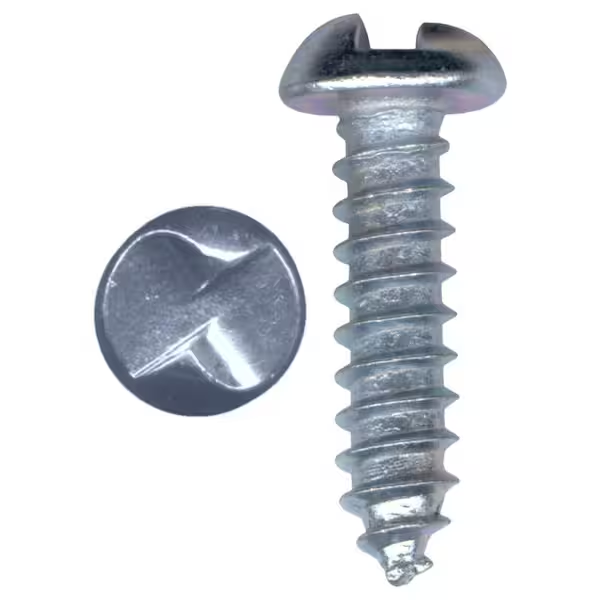
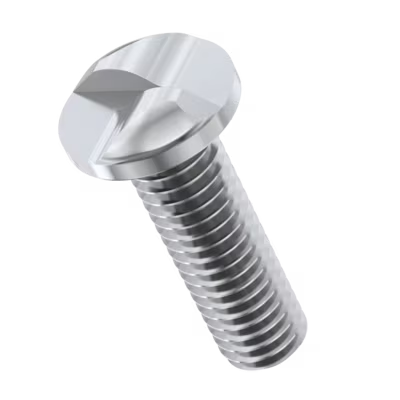
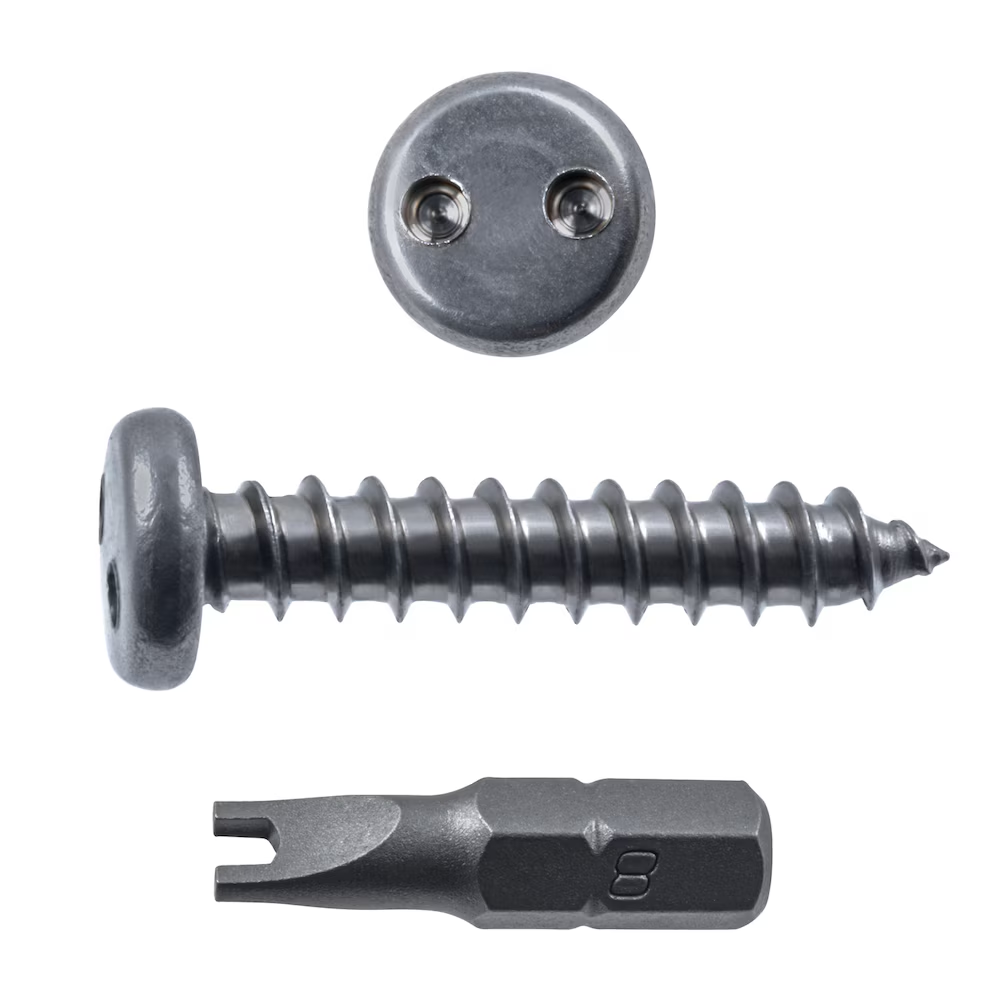
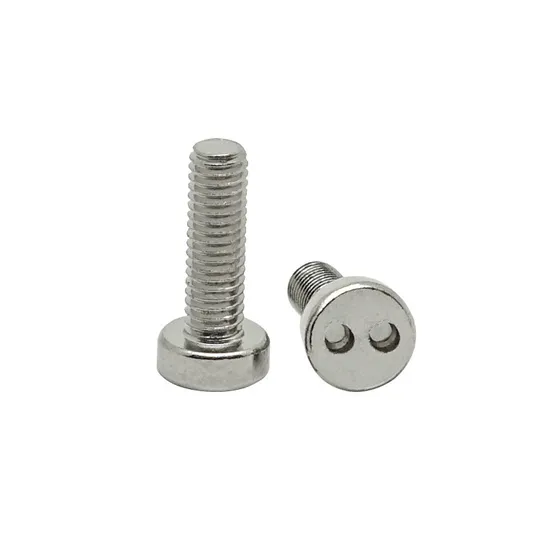
3.Snake-Eye Screws: Feature two round, opposing holes. They require a specific two-pin spanner driver, uncommon in general toolkits.
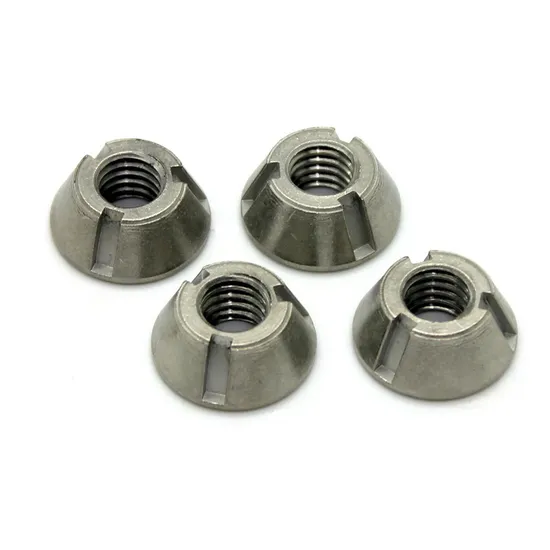
4.Tri-Groove / Tri-Wing Screws: Recognizable by their three radial slots. While some sizes are used in electronics, the security variants are less common and require a precise driver.
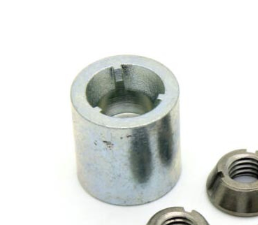
5.Frangible / Break-Head Screws: The head is designed to shear off once a specific torque is reached during installation, leaving only a smooth, non-grippable stud behind. This is the ultimate permanent fastener.
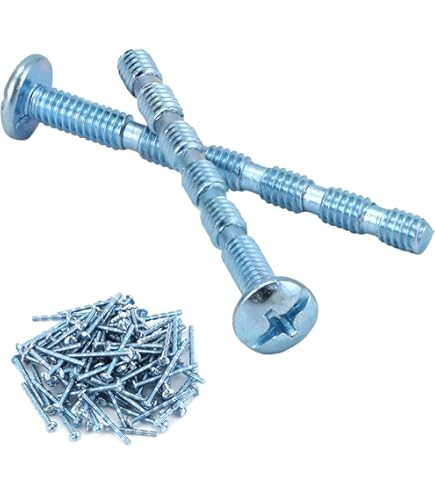
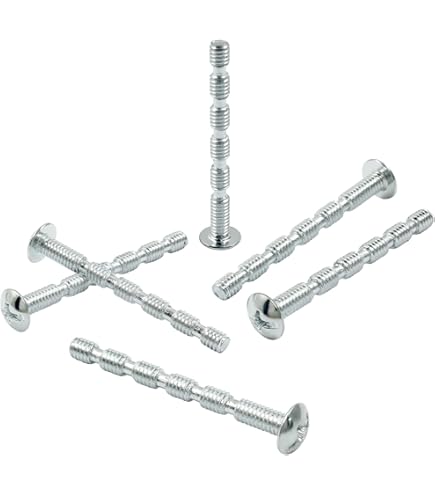
So, are security screws a magic shield?
No. Are they a critically important and highly effective deterrent? Absolutely yes.
In the world of non-standard screws, the security variant stands as a clear testament to the principle that smart, specialized engineering can solve very real-world problems.
Many leading manufacturers and engineering projects have long incorporated these types of special screws into their security specifications. For instance, in public rail transit, communication base stations, and anti-tamper panels for high-end electronic devices, such designs have become standard. Their effectiveness lies not only in the design itself but also in the precise understanding of the psychology of potential intruders—when the required tools are uncommon, removal time increases significantly, and the risk of tampering rises sharply, most non-professional vandalism tends to back down.
So, what security fastening challenges is your project or product currently facing? Have you had any unique experiences in selecting or applying security screws? Feel free to share your insights or questions in the comments section. Also, follow us to stay informed about more fastener insights.