
Whatsapp: +86 13925897099
Address: No. 17, Chicheng 10th Road, Wanxiang Industrial Park, Yangdong District, Yangjiang City, Guangdong Province, China

Inside a Screw Factory: A Hidden Journey of Precision

In a small corner of the industrial world, the birth of every single screw follows a path defined by precision and rigor. Today, let us explore this complete journey—from drawing to finished product—and uncover the extraordinary processes hidden behind an ordinary screw.
From Requirements to Design
Every custom screw begins with a clearly defined requirement. Based on the application scenario, strength specifications, and environmental conditions, the engineering team starts by drafting a detailed manufacturing blueprint. This includes selecting the appropriate material, designing dedicated tooling, planning the production process, and defining corresponding inspection and packaging standards.
Once the design is completed, a cross-department order review ensures the feasibility of the solution. The procurement team then carefully selects raw materials, laying a solid foundation for production.


Forming, Machining, and Strengthening
The core of manufacturing starts with cold heading, where metal wire is formed into the basic shape of the screw under high pressure. But this is only the beginning. Subsequent secondary processes give the screw its precise functionality: hole drilling, tapping, turning, polishing, slot milling, and other operations gradually refine every detail.
The critical threads are precisely formed at this stage through thread rolling. For certain special designs, additional processes such as thread cutting or bending are also applied.
To meet strength and performance requirements, screws undergo precisely controlled heat treatment. By carefully regulating temperature and time, the internal metal structure is adjusted to achieve the required balance of hardness and toughness. Surface treatment then adds a “protective layer”—processes such as electroplating, oxidation, or coating enhance corrosion resistance and, in some cases, provide specific colors or textures. Depending on functional needs, some screws may also receive special treatments such as nylon patch, baking paint, or plastic overmolding.

Rigorous Inspection and Reliable Delivery
Before packaging and shipment, every screw must pass inspection by high-precision CCD vision inspection systems. These automated systems detect micron-level dimensional deviations and surface defects, ensuring that only fully qualified products move forward.
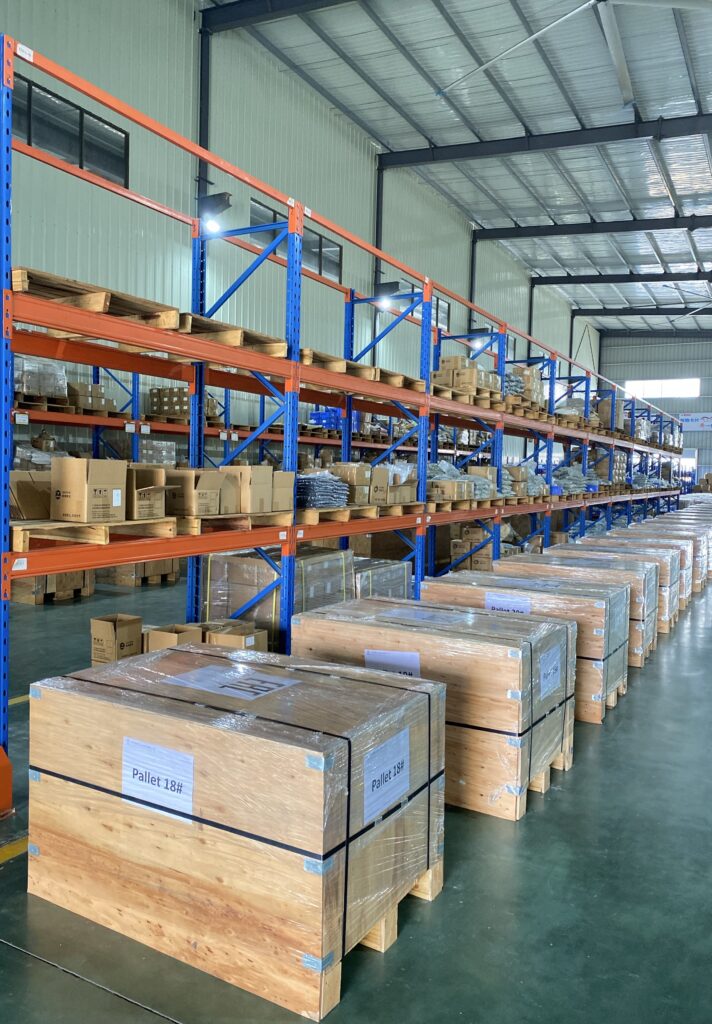
Approved screws are then packaged according to transportation and storage requirements—whether in moisture-proof plastic bags, standard cartons, or fumigated wooden crates designed for international shipping—all intended to provide optimal protection.
Logistics arrangements are tailored to shipment volume and destination, with suitable container trucks selected accordingly. Comprehensive technical support and after-sales service continue even after delivery.

Running through all these stages is a continuously operating quality control system. From raw material incoming inspection to finished product dispatch, every manufacturing step is monitored and verified. This is not merely a process requirement, but a fundamental commitment to product reliability.
Behind this precise journey lies an unwavering pursuit of reliability. Though small in size, a screw carries one of the most essential responsibilities in the engineering world—connection. Though complex in process, each step ensures that every delivery can withstand the test of time. This may well be the most straightforward philosophy of modern manufacturing: systemize simple tasks, and execute systematic processes with absolute rigor.